Choosing the Right Portable Spectrum Analyzer: Key Factors and HAROGIC PX Series Overview
Selecting the appropriate portable spectrum analyzer is a responsible process that requires a comprehensive assessment of application needs, key technical parameters, ease of use, and long-term support throughout the device’s lifecycle.
SEA Electronics Ukraine offers a wide range of spectrum analyzers from various types and manufacturers. In this article, we focus on selection recommendations from the HAROGIC brand, using their products as examples—particularly the new HAROGIC PX series of portable spectrum analyzers.
Fundamentals of Spectrum Analysis and Its Applications
A spectrum analyzer is an instrument that precisely measures and visualizes signal characteristics in the frequency, time, and modulation domains. It is widely used in RF engineering, telecommunications, and electronics for signal analysis, interference detection, and system diagnostics.
There are several main types of spectrum analyzers, categorized by analysis method and application domain:
1. By Analysis Method:
Swept-Tuned Spectrum Analyzer
This classic type tunes a local oscillator (LO), which mixes with the input signal at each target frequency point. The intermediate frequency (IF) is filtered, and its amplitude is measured by a digital detector before being displayed.
FFT Spectrum Analyzer
Uses Fast Fourier Transform (FFT) to analyze the IF signal. It offers much higher speed and accuracy compared to the swept method. In modern devices, FFT analysis is a standard requirement. Its efficiency depends on the analysis bandwidth (at least 25 MHz) and the number of FFT points (1,000 or more).
Real-Time Spectrum Analyzer (RTSA)
An advanced FFT analyzer that performs continuous signal analysis with no "blind spots", ensuring precise signal correlation across frequency and time domains. These devices offer high throughput and deliver the most accurate measurement experience.

2. By Form Factor and Application:
Benchtop (Laboratory) Spectrum Analyzers
Available in a wide range of quality levels—from budget-friendly models to high-precision lab-grade instruments. Entry-level benchtop units often fall short compared to modern portable solutions due to limited performance.
Portable (Handheld) Spectrum Analyzers
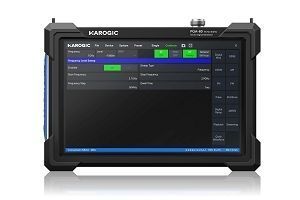
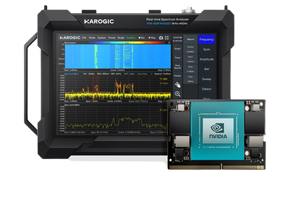
Designed for field use: lightweight, battery-powered, and capable of high performance. The latest models, such as the HAROGIC PX series, deliver superior analysis quality compared to many entry-level benchtop devices.
USB Spectrum Analyzers (Software-Defined Instruments)
Rely on a PC for control and output. These compact devices cover a wide range of applications, though quality varies from simple tools to professional-grade performance.
How to Choose a Portable Spectrum Analyzer: Key Specifications
With advancing technology, portable spectrum analyzers are becoming increasingly popular. To choose the optimal model, consider the following features:
Frequency Range
Defines which signals you can analyze. Choose an analyzer with a frequency range that exceeds your highest signal frequency. For example, analyzing Wi-Fi signals requires up to 6.3 GHz, but testing harmonics may require up to 18 GHz.
HAROGIC PX offers models with ranges of:
-
9 kHz – 9 GHz
-
9 kHz – 20 GHz
-
9 kHz – 40 GHz
The 40 GHz model provides complete coverage for most RF analysis tasks.

Sweep Speed
Determines how quickly results are obtained. Slow devices may require reduced resolution or longer wait times. HAROGIC PX delivers top-tier performance—for instance, scanning 10 GHz in tens of milliseconds with an RBW of 100 kHz.
Spectral Purity
Reflects the device's ability to measure signals accurately without adding internal interference. Key parameters include:
-
Phase Noise
-
Spurious Signals
-
Harmonics
The PXN-400 model (up to 40 GHz) achieves typical phase noise of -107 dBc/Hz at 10 kHz offset and spurious levels below -65 dBc.
Dynamic Range
A wide dynamic range allows detection of weak signals near strong ones. Consider:
-
DANL (Displayed Average Noise Level)
-
TOI (Third-Order Intercept Point)
A low-noise amplifier can improve DANL but may degrade TOI—balance is important.
Maximum Input Power
In high-power environments (e.g., near transmitters), it’s critical not to exceed the input limit to avoid damage. HAROGIC PX includes overload protection and supports high input power levels.
Measurement Functions
Modern analyzers should support advanced features like:
-
Channel Power
-
Occupied Bandwidth (OBW)
-
ACPR
-
Spectral Emission Mask (SEM)
-
AM/FM Demodulation
-
Interference Analysis (Waterfall/Spectrogram)
HAROGIC PX provides these features by default—no additional licenses required.
Portability and Battery Life
For field use, weight and autonomy are critical.
HAROGIC PX weighs only 1.5 kg and operates up to 3 hours on battery. It also supports power bank operation.

Scalability and Secondary Development
A high-end spectrum analyzer should be customizable for specific tasks—from monitoring to signal direction finding.
HAROGIC PX supports an open API for secondary development, enabling integration into complex RF systems or automated testing workflows beyond the standard SAStudio4 software.

Conclusion
Choosing a portable spectrum analyzer requires a holistic approach: considering the intended applications, technical specifications, ergonomics, and long-term support.
SEA Electronics Ukraine, as the official distributor of HAROGIC, offers portable spectrum analyzers from the PX series and other product lines.
Our technical specialists will help you select a modern solution with a wide frequency range, high performance, and support for advanced integration and customization.