




|
Quantity
|
Total
|
||
|
|
|||
Signal Generator: What It Is and Where It's Used
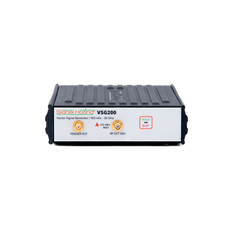
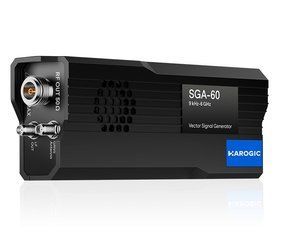
A signal generator is a key device in radio engineering and electronics that creates electrical signals with specific parameters. It is essential for testing, diagnostics, and tuning of electronic circuits. Signal generators are also commonly used in combination with an oscilloscope to analyze waveform characteristics.
Where Are Signal Generators Used?
Signal generators are widely used across various fields:
-
Laboratories – for experiments and research
-
Manufacturing – for testing electronic components
-
Service centers – for diagnostics and repair of equipment
-
Telecommunications – for simulating communication signals
-
Medical field – for testing devices such as ECG machines
-
Audio engineering – for sound quality verification
Types of Signal Generators
Signal generators come in different types based on their features:
| Generator Type | Features | Use Case | Frequency Range | Signal Type |
|---|---|---|---|---|
| Analog | Lower precision, limited use in modern systems, still useful for simple analog circuits | Testing analog circuits | 1 Hz – several MHz | Sine, triangle, square |
| Digital | High precision, can generate signals with fixed amplitude, frequency, and phase | Testing digital devices and ICs | Up to several GHz | Square, pulse |
| Logic | Generates digital pulses, ideal for testing digital logic circuits | For checking counters, registers, logic components | Up to several MHz | Logic levels (0, 1) |
| Mixed-signal | Combines analog and digital signals for testing mixed systems like modems | Testing digital systems with analog inputs (e.g., ADCs, DACs) | From low up to GHz | Mix of analog and digital |
| Noise generator | Used to test filter efficiency or system sensitivity to noise | Verifying filter characteristics or studying system noise immunity | Up to several MHz | White noise, colored noise |
Key Technical Specifications
When selecting a signal generator, consider:
-
Sampling frequency – determines accuracy (up to 1 GHz in modern models)
-
Signal amplitude – from microvolts to tens of volts
-
Number of output channels – allows working with multiple signals
-
Extra features – programmability, waveform editing, modulation support
How to Choose a Signal Generator
The choice of a signal generator depends on its intended use. Here's a basic guide:
-
For hobbyists – A basic generator with simple functions and a frequency range up to a few MHz. Suitable for generating sine and square waves.
-
For laboratories – High-precision generators with wide frequency ranges (from MHz to tens of GHz), capable of generating complex signals and supporting modulation.
-
For industrial use – Advanced devices with robust testing capabilities, high reliability, wide frequency range, and excellent signal stability.
Where to Buy a Signal Generator
You can purchase signal generators from our online store at sea-tm.com.ua. We offer a wide selection of models for various applications. Our team provides professional advice and assistance in choosing the most suitable device based on your specific needs.