












|
Quantity
|
Total
|
||
|
|
|||
Test and Measurement
SEA Test & Measurement — B2B Portal for Professional Test and Measurement Equipment
Measuring instruments are devices used to determine physical quantities such as temperature, pressure, electric current, length, and more. They are essential in everyday life, as well as in industry, medicine, science, and other fields.
Why Are Measuring Instruments Needed?
Measurements play a crucial role in all areas of life. For example, at home, household measuring instruments such as kitchen scales, thermometers, or electricity meters help control various parameters. In industry, monitoring temperature, pressure, or electrical characteristics ensures production safety and efficiency.
Depending on their purpose and operating conditions, there is a wide variety of measuring devices. They differ in their working principle, the type of parameters they measure, and how results are displayed. Let’s explore the main classifications of measuring instruments.
Types of Measuring Instruments
There are many types of measuring instruments, classified according to different criteria. They may differ by the physical quantity being measured, the operating principle, the way results are displayed, or the field of application. Each of these criteria helps determine which measuring device is best suited for specific tasks.
By the Measured Physical Quantity
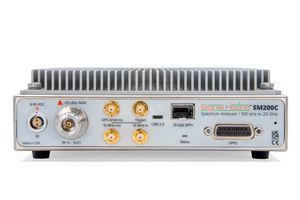
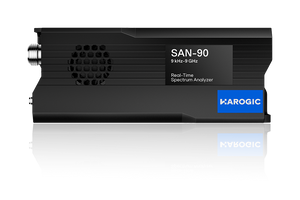
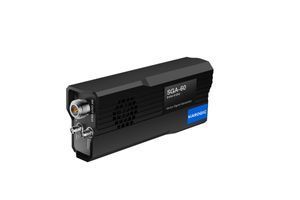
This classification includes electrical measuring instruments (ammeters, voltmeters, ohmmeters, microohmmeters), mechanical ones (calipers, manometers), temperature instruments (thermometers, pyrometers), optical, and many others. To analyze electrical signal parameters, oscilloscopes and frequency counters are often used — they help specialists observe waveforms, frequencies, and other signal characteristics. Meanwhile, spectrum analyzers make it possible to study the frequency composition of a signal, which is especially important when testing radio-electronic equipment.
By the Operating Principle
Measuring instruments can be mechanical, electronic, digital, or analog.
For example, multimeters combine several functions and allow you to measure voltage, current, resistance, and other parameters with high accuracy. Devices such as laboratory power supplies and electronic loads are often used together with measuring instruments to test electronic circuits under controlled conditions.
By the Way Results Are Displayed
There are analog and digital instruments. Analog devices have a scale and a pointer, while digital ones display data on a screen, minimizing the chance of reading errors. For example, signal generators make it possible to produce electrical oscillations of various shapes and frequencies with precise digital adjustment.
By the Field of Application
Measuring instruments are used in medicine (tonometers, heart rate monitors), construction (laser levels, tape measures, wire and cable detectors), and electrical engineering (multimeters, testers), among many other areas. For industrial and laboratory applications, spectrum analyzers, oscilloscopes, and frequency counters are especially important, providing high accuracy and reliable results.
Buy Measuring Instruments in an Online Store
If you need high-quality and accurate instruments, it is important to choose reliable suppliers. Measuring instruments and their purpose play a key role in selecting the right equipment, as the accuracy and reliability of measurements depend on the quality of the product. SEA Test & Measurement collaborates with global industry leaders, supplying models from trusted manufacturers, ensuring accuracy, durability, and ease of use for all instruments.