



|
Quantity
|
Total
|
||
|
|
|||
What is a Vector Network Analyzer?
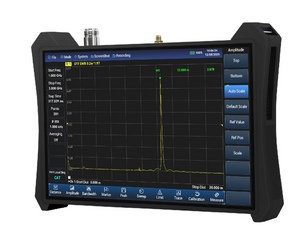
A Vector Network Analyzer (VNA) is a high-precision electronic instrument designed to measure the characteristics of electrical networks in the radio frequency (RF) and microwave ranges. Its primary function is to determine the parameters of radio devices, including dielectric constant, reflection coefficients, and wave absorption.
These devices are used both in industrial applications and for personal purposes, such as scientific research, telecommunications, as well as in military and medical equipment. Thanks to its versatility, this equipment allows evaluation of the frequency and phase characteristics of electrical circuits, which is especially important in the development of antennas, amplifiers, and filters.
Operating Principle of a Vector Network Analyzer
The operating principle of a VNA is based on the measurement of S-parameters (scattering parameters), which describe signal transmission and reflection in an electrical circuit. The analyzer generates a sinusoidal signal, applies it to the component under test, and measures the reflected and transmitted power. The key parameters include:
-
S11 – input reflection coefficient;
-
S21 – forward transmission coefficient;
-
S12 – reverse transmission coefficient (from output to input);
-
S22 – output reflection coefficient.
Unlike scalar network analyzers that measure only signal amplitude, vector analyzers also measure phase, providing a more comprehensive view of the circuit’s behavior.
Functional Capabilities of a Vector Network Analyzer
The instrument allows testing of both passive and active radio components, such as:
-
Feeders and waveguides – for analyzing transmission line losses;
-
Amplifiers – for measuring gain coefficients;
-
Antennas – for studying the Voltage Standing Wave Ratio (VSWR);
-
Filters and attenuators – for evaluating bandwidth and attenuation;
-
Frequency converters – for analyzing nonlinear parameters.
Thanks to modern technology, VNAs are widely used in wireless communication, satellite systems, and radar applications.
Types of Vector Network Analyzers
There are several main types of VNAs depending on their features and intended use:
-
High-end models – precision instruments for scientific research and manufacturing;
-
Laboratory devices – used in research centers and universities;
-
Portable versions – compact models for field measurements.
Each option has its own specifics, so the choice depends on the requirements of the particular task.
How to Choose a Vector Network Analyzer
When selecting a device, consider the following specifications:
-
Frequency range – defines the range in which the analyzer operates (e.g., 10 kHz to 50 GHz);
-
Dynamic range – affects measurement accuracy (typically between 100 and 150 dB);
-
Connector type (SMA, N, BNC) – important for compatibility with other equipment;
-
Enclosure durability – a metal body offers protection from external factors;
-
Size and weight – important for portable devices;
-
Functionality – additional features like vector calibration support and automated analysis.
Where to Buy a Vector Network Analyzer
You can purchase the appropriate instrument from the online store sea-tm.com.ua, where a wide selection of models is available for various needs. The store’s specialists offer professional advice and help choose the best solution for your specific application.
With its large selection and high-quality service, SEA is a reliable supplier of measurement equipment for engineers, researchers, and radio enthusiasts.