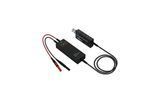
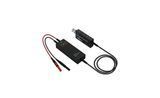
At the end of 2024, the 15th Asian Energy Technology Development Forum, organized by Century Power Network, was grandly inaugurated at a hotel in Shenzhen. Micsig was invited to participate in this forum, where experts engaged in in-depth exchanges with numerous industry professionals on new technologies and solutions in the field of power electronics testing and measurement. At the Power Industry Supporting Brand Awards gala, Micsig was honored with the Optical Isolation Probe Excellence Award for its robust research capabilities and high product quality.

On the day of the forum, the Micsig booth was bustling with activity as attendees shared their practical experiences in the energy sector. Professional experts came prepared, bringing test boards to conduct real-time measurements using optical isolation probes, and were satisfied with the testing results.

Micsig has been actively involved in the industry for many years, leading in flat oscilloscopes and optical isolation probes. The company consistently strives to solve problems and meet the needs of power electronics manufacturers by offering testing and measurement scenarios for power semiconductors.

Optical isolation probes play a crucial role in double pulse tests. For example, in a MOSFET gate-controlled half-bridge circuit, it is necessary to test the Vds, Id, and Vgs of the lower tube and observe the Vgs of the upper tube. Here, brand experts use optical isolation probes to test the Vgs signal of the upper tube and recommend using Micsig's high-resolution 3-series oscilloscope with a bandwidth of up to 500 MHz, a sampling rate of 3GSa/s, and 4 channels, which can support simultaneous observation of the switching of the upper and lower tubes as well as the Id signal.
Many users might ask: "We have used Micsig's DP series high-voltage differential probes, which work well when testing silicon devices capable of measuring voltages up to 7000 V, with a small bandwidth (500 MHz). Now that we have switched to GaN and SiC devices, which must meet the bandwidth requirements for these devices and can test the lower tube, why do we always encounter problems when testing the voltage of the upper tube?"

Through data analysis and comparison of the above graph, we found that the switching speed of silicon carbide (SiC) and gallium nitride (GaN) has reached the ns level. A significant advantage of this feature is that it reduces the power consumption of pulse power supplies, but it also creates enormous difficulties for testing. In a half-bridge circuit, the Vgs voltage of the upper tube is elevated on the continuously conducting and switching lower tube Vds. The Vds voltage can jump from zero to thousands of volts in a few nanoseconds, with high voltage superimposed on high frequency, causing a significant increase in high-order harmonic components. The differential Vgs voltage of our measured object is often only a few tens of volts, which will be significantly affected by common-mode interference caused by high-order harmonics of Vds. We need to try to suppress this common-mode interference during measurement, which requires that the testing equipment still has a high common-mode rejection capability in the high-frequency range, and this parameter is called the common-mode rejection ratio (CMRR).
Taking Micsig's DP series high-voltage differential probe as an example, at 100 kHz, CMRR > -70 dB; at 20 MHz, CMRR > -40 dB; at 120 MHz, CMRR > -26 dB. For differential probes, this CMRR is already excellent in the industry, but it is still far from sufficient to meet our requirements for measuring the Vgs of the upper tube. We need a testing device that still has a high CMRR in the high-frequency range.
Comparison of High-Voltage Differential Probes and Optical Isolation Probes in Actual Measurements
Regarding the impact of CMRR on testing, let's make a comparison to see the problems caused by high-voltage differential probes when testing SiC devices, as well as a comparison of tests with probes with high CMRR:

The device under test is a SiC switch with upper and lower tubes with a Vce voltage of approximately 500 V. High-voltage differential probes and optical isolation probes (using Micsig's MOIP series optical isolation probe) are simultaneously connected to the Vge signal of the upper tube for double pulse testing.

The above image is the test result diagram. The white signal in the figure is the result of the high-voltage differential probe test. It can be seen that during the rise of Vge, there are strong fluctuations up and down, and the original waveform is almost indistinguishable. We used high-voltage differential probes to test the Vge signal of the upper tube when the Vce voltage reached 800 V. The fluctuations exceeded the turn-off voltage of SiC, which will seriously affect the judgment of engineers.
The red waveform in the figure is tested by the optical isolation probe, and the signal interference is much smaller. If the optical isolation probe is tested separately, there is almost no interference. The interference observed here is the influence of the high-voltage differential probe on the optical isolation probe. In fact, the bottom noise of the optical isolation probe is lower than that of the high-voltage differential probe, the accuracy is higher, and the common-mode voltage that can be measured is also larger. How is this achieved?
Advantages of Optical Isolation Probes
Micsig uses its exclusive SigOFIT™ technology to select an appropriate attenuator for the size of the measured signal before testing, allowing full-scale testing of differential signals from ±0.01 V to ±6250 V. Adapting to a wide range of tests, it improves test accuracy (reaching 1%), reduces bottom noise, and increases the signal-to-noise ratio.

The Micsig MOIP series optical isolation probes can achieve a bandwidth of up to 1 GHz with a minimum bottom noise of less than 0.45 mV (RMS). In the 1 GHz range, the CMRR still exceeds 100 dB. Therefore, using optical isolation probes to measure the Vgs of the upper tube no longer needs to consider the impact of common-mode interference, perfectly solving the problem of insufficient CMRR of high-voltage differential probes.
In addition, due to the long lead wires (usually about 20 cm), the two input wires of the differential probe can be regarded as an antenna, which senses external magnetic field interference. Due to the extremely high switching speed of gallium nitride, the magnetic field generated by it passing through the input end of the high-voltage differential probe will cause fluctuations. Sometimes this fluctuation exceeds a certain limit, causing the gallium nitride device to burn out and explode instantly. The optical isolation probe uses MCX or MMCX connections with extremely short wires, almost no antenna effect, and parasitic capacitance within a few pF, eliminating the threats caused by testing.
Summary
Looking to the future, Micsig will continue to uphold the concepts of innovation, professionalism, and excellence, constantly increasing investment in research and development.